
Solar BOS Component Shipping: Why Single-Use Packaging Is Costing You More Than You Think
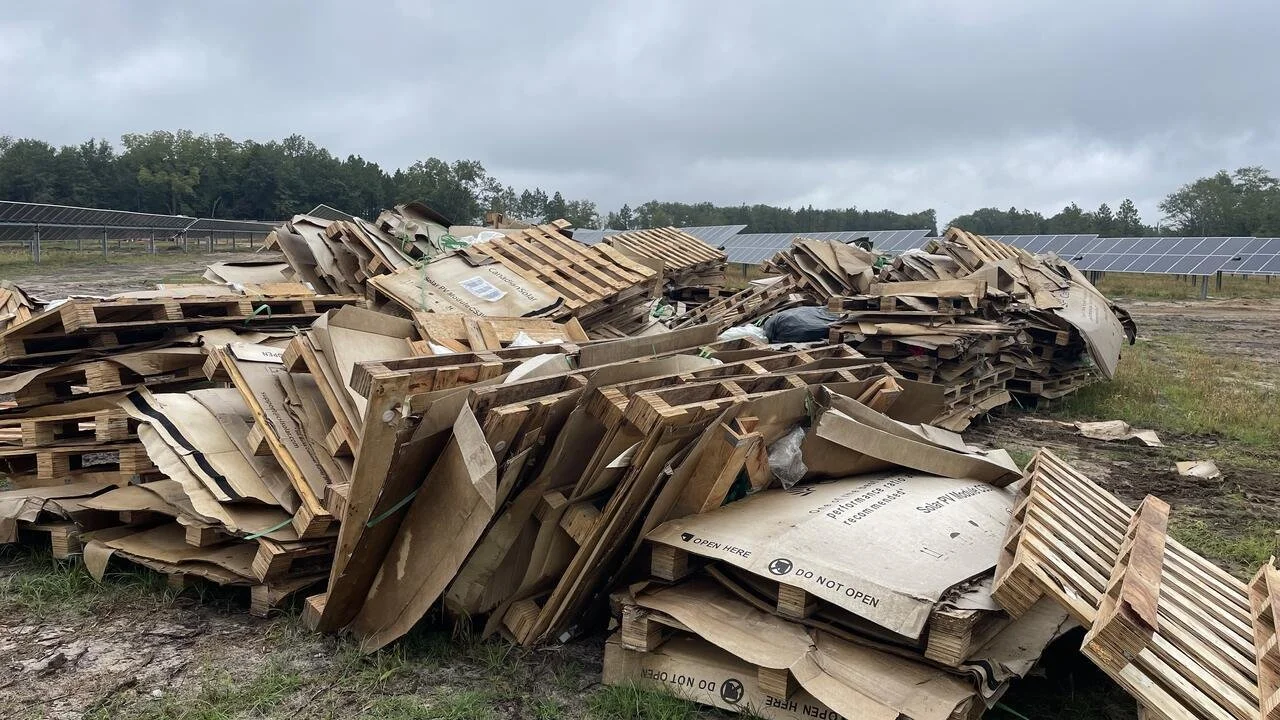
For balance-of-system (BOS) components like wire coils, harnesses, and trackers, the industry default is wood pallets, cardboard boxes, foam inserts, and shrink wrap—used once and then sent to a landfill.
It works well enough for getting components from a factory to a job site. But once on site, it’s a different story.
EPCs receiving BOS and tracker equipment on utility-scale projects are often faced with with damaged components, piles of packaging waste, and crews spending time managing cardboard instead of installing hardware. For both EPCs and manufacturers, the hidden costs add up in ways that rarely appear on a PO.
Reusable bulk containers are a better model. Here's why.
How Solar BOS and Tracker Components Are Typically Shipped
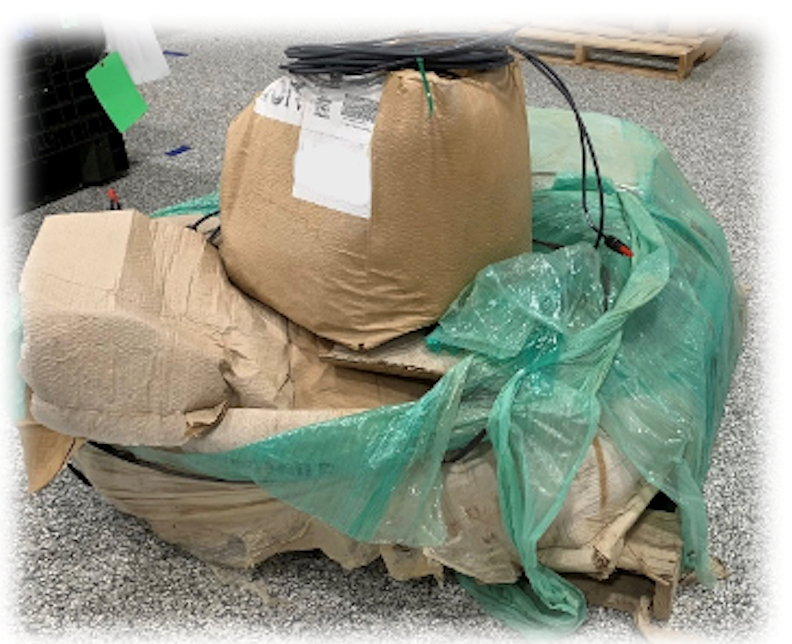
Unlike solar panels, which are flat, uniform, and straightforward to palletize, BOS components come in a wide range of shapes and sizes. Wire harnesses, combiner boxes, disconnect switches, trackers, and structural hardware all ship differently—and most arrive in single-use cardboard packaging on wood pallets.
Single-use packaging works reasonably well in a controlled warehouse environment. But it's poorly suited for the realities of a utility-scale solar job site: outdoor staging, weather exposure, rough handling during unloading, and components that may sit in a laydown yard for weeks or months before installation. By the time a crew needs to access those components, the packaging has often already failed—crushed corners, water damage, torn flaps, missing or illegible labels.
The result is component damage, inventory confusion, and disposal overhead that most project budgets never explicitly account for.
Where Single-Use Packaging Fails on Utility-Scale Solar Sites
Weather exposure. Cardboard is not rated for outdoor storage. On a utility-scale site, BOS components may sit outside for months before installation. Cardboard absorbs moisture, loses structural integrity, and fails—sometimes before anyone has touched the components inside. Wood pallets warp and rot under the same conditions. Neither is designed for the job site environment they routinely end up in.
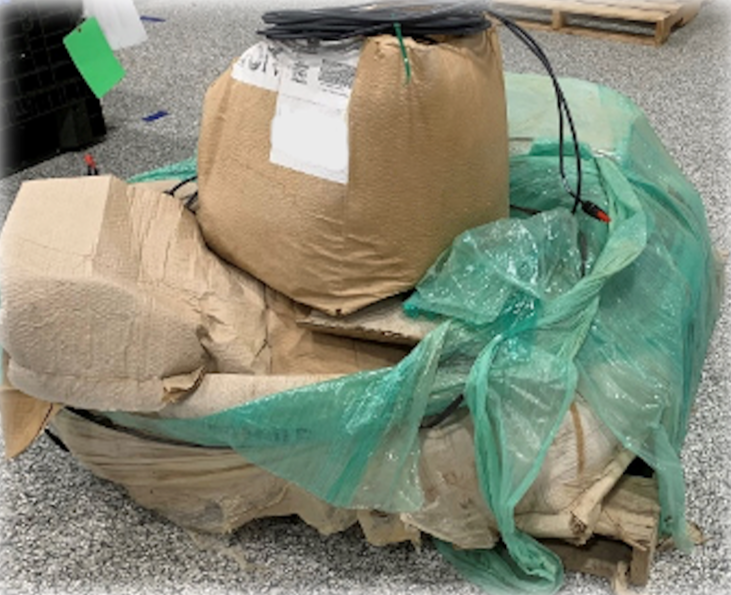
Component damage. Single-use packaging offers limited structural protection for heavy or irregularly shaped hardware. Stacking pressure, moisture absorption, and rough handling during transport and unloading create conditions for damage to components that are expensive, difficult to source quickly, and critical to project timelines. A delayed combiner box or damaged tracker doesn't just cost the price of the part—it can hold up an entire installation.
Cardboard fails. Wood crates rot. Labels disappear. And when it's time to install, crews can't find what they need.
Inventory visibility. Cardboard boxes don't stack cleanly, don't label consistently, and don't hold up long enough to keep labels legible on a large outdoor laydown area. On a site covering hundreds of acres, crews waste time sorting through damaged packaging to find the right components. Misidentification errors slow installations and create costly rework.
Job site waste. Every project generates significant cardboard, foam, plastic film, and wood waste from single-use BOS packaging. That material has to be broken down, loaded, hauled, and disposed of—dumpster fees, hauling costs, and landfill charges that recur on every project. Like wood pallet disposal for solar panels, it's a structural cost that compounds across an entire project portfolio.
The Real Cost: Damage, Disposal, and Lost Inventory Visibility
The upfront cost of single-use packaging is low. The total cost of ownership is not.
Cardboard is a consumable. Every shipment requires new material. The cost is fixed per project regardless of how many times a manufacturer ships to the same EPC or how many projects an EPC runs in a year. There's no asset to recover, no value to recapture, and no reduction in cost over time.
Component damage is particularly costly for BOS and tracker hardware. Lead times for replacement parts can be long, and a delayed component can push installation timelines in ways that ripple across the entire project schedule. The financial impact of a single significant damage event can exceed the cost of a reusable packaging system many times over.
Disposal costs, while smaller per project than solar panel packaging waste, still add up at scale. Companies running multiple utility-scale projects annually are absorbing cardboard disposal costs continuously throughout the year—a recurring line item that rarely gets examined as closely as it should.
And lost inventory visibility has a cost that's harder to quantify but easy to recognize on site: crews that can't find what they need, installation sequences that get disrupted, and project managers spending time on logistics problems that better packaging would have prevented.

Why Reusable Bulk Containers Are Built for Solar Job Sites
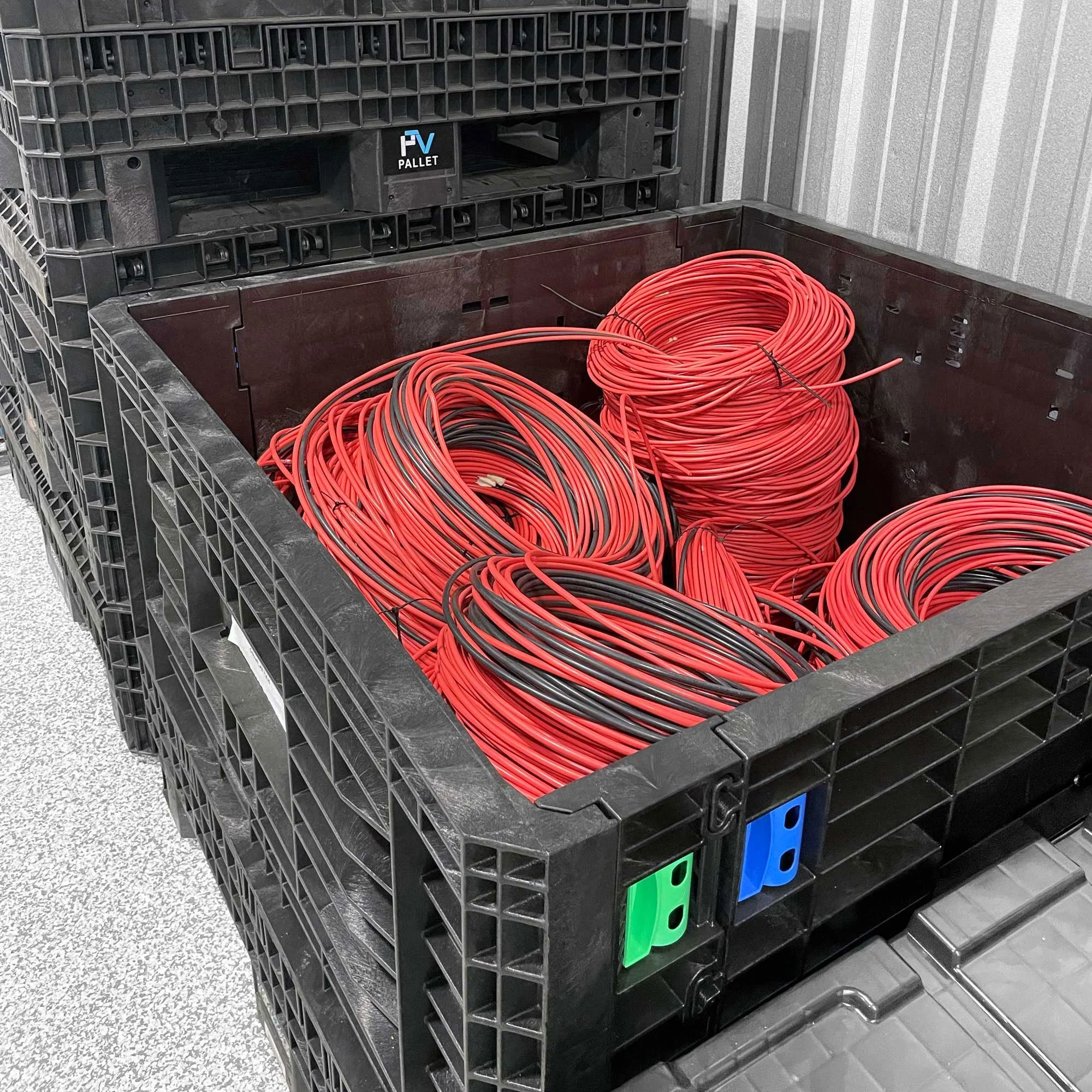
Reusable bulk containers—rigid, stackable, weatherproof HDPE containers designed for long-term use in industrial supply chains—address each of these failure points directly.
Weather resistance. Unlike cardboard, bulk containers don't absorb moisture, lose structural integrity, or fail under outdoor conditions. PVpallet's collapsible bulk containers are UV-resistant HDPE rated from -40°F to 194°F—built for the same outdoor environments where BOS components spend weeks or months waiting for installation. Components arrive protected and stay that way.
Structural protection. Rigid container walls don't crush under stacking pressure. Components arrive in the same condition they left the warehouse, regardless of how they were handled in transit. That reduces damage events and the claims, replacement orders, and schedule disruptions that follow.
Inventory tracking. Bulk containers are designed to be assets, which means they're worth investing in. Barcodes, RFID tags, or QR labels can be applied to each container to track contents, quantity, and location across a large site. On a project covering hundreds of acres, that visibility means crews go directly to the right array with the right product—no sorting through unlabeled boxes or searching for missing components.
Stackability and space efficiency. Bulk containers stack securely in laydown yards—up to six high—and are designed for standard forklift handling. That keeps sites more organized, improves space utilization, and reduces the handling steps between delivery and installation. Empty containers collapse flat for return shipping: the most popular 45x48x34 container fits 252 units collapsed in a 53' trailer versus 84 erect, a 3x improvement in return freight efficiency.
Zero job site waste. When installation is complete, the containers are inspected, collapsed, and returned for the next project. No cardboard to break down, no dumpsters to fill, no disposal fees to pay.
TCO Comparison: Single-Use vs. Reusable Solar BOS Packaging
Most reusable bulk container systems reach break-even within 2 to 5 uses. After that, every additional trip reduces the per-use cost further while single-use packaging costs stay flat.
| Single-use packaging | Reusable bulk containers | |
|---|---|---|
| Upfront cost | Low | Higher |
| Lifespan | 1 trip | Long-term, repeated use |
| Weather protection | ✕ | ✓ −40°F to 194°F HDPE |
| Structural protection | ✕ Crushes under stacking | ✓ 1,800 lb capacity |
| Inventory tracking | ✕ Labels fail outdoors | ✓ Barcode / RFID capable |
| Job site disposal cost | ✕ Recurring every project | ✓ Zero — containers return |
| Cost per trip | Resets every shipment | Drops with every trip Break-even in 2–5 uses |
Which Solar BOS Packaging Is Right for Your Operation?
When Single-Use Packaging Still Makes Sense
Single-use packaging remains appropriate when:
You're shipping to an international destination where return logistics isn’t feasible
Component variety or size is too irregular to standardize container sizing
Project volume is too low to support a closed-loop return program
When Reusable Bulk Containers Are the Better Investment
Reusable bulk containers consistently deliver better total cost of ownership when:
You're shipping BOS or tracker components across multiple utility-scale projects
Components are high-value, damage-sensitive, or have long replacement lead times
Job site disposal is a recurring line item in your project budgets
Inventory visibility and organized laydown areas matter on large sites
A closed-loop return logistics program is feasible
Reusable bulk containers aren't a sustainability initiative with a cost attached. They're a better operational model for a supply chain that's ready for one.
The Bottom Line
Single-use packaging for solar BOS and tracker components is the industry default because it's familiar and cheap upfront. But for any manufacturer, distributor, or EPC moving this equipment across multiple utility-scale projects, the real costs—damage, disposal, lost inventory visibility, and weather failures—make it an expensive habit.
Reusable bulk containers aren't a sustainability initiative with a cost attached. They're a better operational model for a supply chain that's ready for one.
Shipping Solar Panels?
The packaging question looks different for modules. We cover the full cost comparison between wood pallets and reusable plastic solar panel pallets in a dedicated guide: Wood vs. Plastic Solar Panel Pallets: A Total Cost of Ownership Breakdown.Ready to evaluate reusable packaging for your BOS components?
Ready to evaluate reusable packaging for your BOS components?
Talk to a Solar Packaging Specialist →