
Case Study: How Seal Solar Reduced Solar Panel Breakage by 95% with PVpallet Series X
Business Challenges: Excessive Breakage, Inefficient Handling and Storage
After experiencing $45,000–$50,000 in annual solar panel breakage, Seal Solar implemented PVpallet’s solar panel pallet to protect modules during transport, storage, and jobsite handling. The result: panel breakage dropped by more than 95%, saving tens of thousands of dollars per year. The pallets paid for themselves within just a few jobs while helping standardize warehouse processes and improve jobsite accountability.
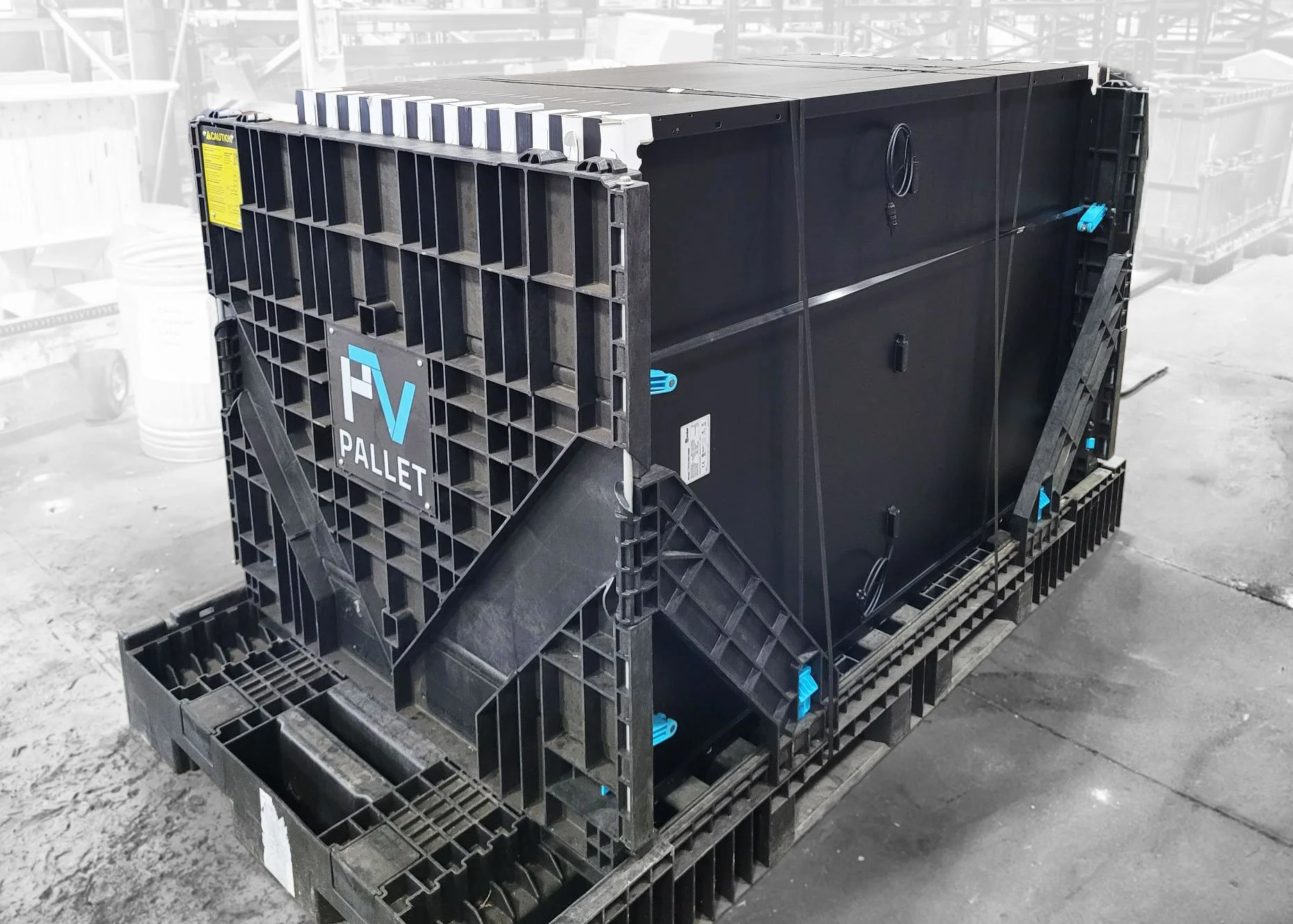
Solar modules kitted in PVpallet solar panel pallet and ready to be sent to a job site
About Seal Solar
Founded in 2015 and based in Little Rock, Arkansas, Seal Solar is a vertically integrated solar energy company providing sales, design, installation, and ongoing support. With more than 200 years of combined construction experience and industry-leading certifications, the team delivers solar, battery storage, EV charging, and microgrid solutions. As the company has grown, Seal Solar has expanded from residential installations into commercial projects and a growing service division—continually seeking smarter, more sustainable ways to deliver solar.
Situation
When Mark Hodnett joined Seal Solar as Warehouse and Fleet Manager in late 2022, he quickly discovered a costly operational problem: solar panel breakage.
Crews frequently transported full pallets of modules to job sites. When unused panels were returned to the warehouse, they were often damaged during transport or handling. Panels were also frequently broken while being stored or moved around the warehouse.
In 2022 alone, more than 200 panels were broken, costing Seal Solar an estimated $45,000–$50,000 annually.
“It was a Wild West period in the warehouse,” explained Mark. “Crews would take whole pallets of panels, and when there were five or six left over, they’d bring them back. It was common for the panels to be broken in transit—both to and from the warehouse.”
Seal Solar was determined to streamline operations and reduce waste. A reliable system for handling and storing panels was essential to protecting margins and preventing further losses. “We tried several different methods, but nothing worked until we tried the solar panel pallets from PVpallet,” said Mark.
Challenges
Excessive panel breakage: More than 200 panels were damaged in 2022, costing an estimated $45,000–$50,000.
Inefficient handling processes: Crews transported full pallets to job sites; leftover panels were often damaged during return trips.
Warehouse inconsistency: Panel handling processes were reactive and varied from crew to crew.
Unsuccessful attempts to fix the issue: Several alternative methods were tried to reduce breakage, but none proved effective.
Solution
In early 2023, Seal Solar purchased five PVpallet Series X solar panel pallets and integrated them into their warehouse workflow. Rather than sending full pallets of modules to job sites, Mark implemented a pre-kitting system:
Warehouse staff load the exact number of panels needed for each job onto a Series X pallet.
Panels are banded securely inside the pallet frame before leaving the warehouse.
Crews pick up only the pallet assigned to their job.
This process eliminated loose solar panels and significantly reduced unnecessary handling. With no extra panels available on the job site, crews became more intentional about how materials were handled, improving accountability and reducing waste.
“Once we started using PVpallet’s solar panel pallets, breakage dropped almost instantly. They paid for themselves after just a couple of jobs,” said Mark. “This year, we’ve only broken one solar panel—and that was on a job site. Not a single solar panel has been broken in transit.”
In addition to transporting panels to job sites, Seal Solar also uses their pallets to store loose modules safely in the warehouse. Integrating Series X pallets into their process improved safety, organization, and efficiency across both warehouse and field operations.
“Once we started using PVpallet’s solar panel pallets, breakage dropped almost instantly. They paid for themselves after just a couple of jobs.”
Mark Hodnett, Warehouse and Fleet Manager at Seal Solar
Results
The impact of PVpallets on Seal Solar’s operations was significant. Using the pallets to pre-kit jobs proved to be the single biggest driver of reduced breakage and cost savings.
Solar Panel Breakage Reduced by Over 95%
2022: 200+ panels broken (≈$50,000 loss)
2023: <50 panels broken
2024: 7–8 panels broken
2025: 7 panels broken
2026: 1 panel broken to date
Key Outcomes
Solar panel breakage reduced by more than 95%
$45,000–$50,000 in annual losses eliminated
Immediate ROI: The pallets paid for themselves after just a few jobs
Improved warehouse efficiency through job pre-kitting
Safer transport and storage of loose solar modules
Standardized handling process across Seal Solar’s crews
Outcome
With PVpallet Series X, Seal Solar transformed a major source of financial loss into a controlled and efficient system for handling solar panels. Breakage dropped by more than 95%, reducing what once cost tens of thousands of dollars annually to near-zero loss.
The pallets also created greater accountability on job sites and enabled Mark to implement a consistent process for warehouse storage, transport, and job preparation.
Mark summed it up simply: “I’m glad I found them. They have reduced breakage so significantly, there’s no reason not to use them.”
“I’m glad I found them. PVpallet’s solar panel pallets have reduced breakage so significantly, there’s no reason not to use them.”
Mark Hodnett, Warehouse and Fleet Manager at Seal Solar
What’s Next
Seal Solar continues to explore new ways to improve efficiency and reduce waste across its operations.
While PVpallet’s solar panel pallets have solved the breakage problem in residential projects, Mark sees potential for reusable bulk bins to support larger commercial jobs, provided there is a reliable process to ensure they are returned.
For now, PVpallet Series X remains a cornerstone of Seal Solar’s warehouse and field operations, ensuring panels are protected from the warehouse to the job site.