
Case Study: How Ørsted Improves Solar Module Storage and Reduces Breakage Risk with PVpallet
Business Challenges: Solar Panel Storage, Solar Panel Breakage, Worker Safety
When deteriorating wood pallets began threatening Ørsted's high-value spare solar module inventory, the company adopted PVpallet's reusable solar panel pallets to improve storage, reduce breakage risk, and create a reusable asset that can be redeployed across future utility-scale solar projects.
Results at a Glance
Improved protection for high-value spare module inventory
Reduced risk of pallet collapse and weather-related damage
Safer stacking and handling for technicians
More efficient use of warehouse space through secure vertical stacking
Long-term reusable asset that moves from project to project
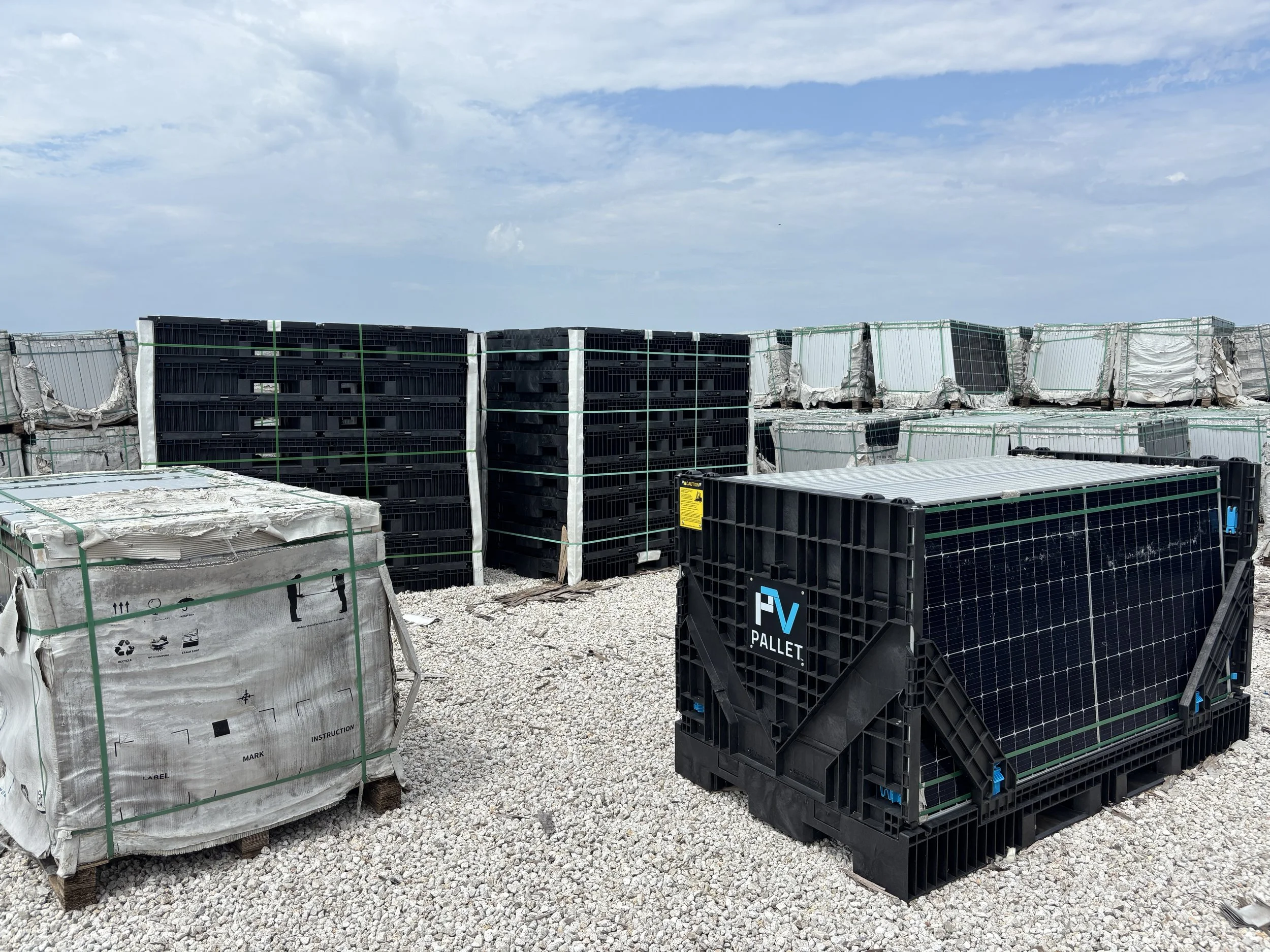
Repalletizing modules on PVpallet’s solar panel pallets at Old 300 solar site
About Ørsted
Ørsted is one of the world's leading renewable energy companies, developing, constructing, and operating utility-scale wind, solar, and battery storage projects. Its Old 300 and Mockingbird Solar Centers in Texas rank among the company's largest U.S. solar installations and support Ørsted's growing renewable energy portfolio.
Situation
Like most utility-scale solar sites, Ørsted's Old 300 solar project maintains an inventory of spare solar modules for future maintenance and repairs. Because replacement modules must match the original manufacturer, wattage, dimensions, and electrical characteristics, protecting that inventory is essential to long-term operations.
During construction, Old 300 initially had limited warehouse capacity, meaning many of these spare modules would likely need to be stored outdoors. Unfortunately, the manufacturer's standard packaging—consisting of wood pallets, cardboard, and plastic wrap—was never intended for long-term outdoor storage. During construction, prolonged exposure to the elements caused some of the packaging to deteriorate, increasing the risk of pallet failure, broken modules, and safety hazards for technicians retrieving inventory.
The problem extended beyond outdoor storage. Robert "RG" Stochl, Senior Plant Manager at Old 300, estimates approximately 4,000 modules were damaged over time through a combination of shipping damage and pallet deterioration. Roughly 1,000 modules were attributable to pallet decay and packaging failure alone.
"The pallets are made of cheap wood. All it takes is one strap with enough tension, and the whole thing falls over. A good wind here, a good wind there—a couple thousand dollars just gone."
— Robert "RG" Stochl, Senior Plant Manager, Ørsted (during Old 300 construction)
This wasn't the first time RG had seen the limitations of the cheaply-made pallets. Earlier in the project, a shipment of solar modules sent on standard wood pallets arrived shattered at a testing facility. Searching for a more durable solution, he discovered PVpallet. He ordered two PVpallet solar panel pallets for a second shipment—and this time, the modules arrived undamaged.
That successful shipment ultimately led to a broader conversation with PVpallet about protecting Ørsted's long-term spare module inventory.
Estimated Value at Risk*
Modules damaged over time: 4,000
Estimated module value: $800,000
Estimated loss from pallet deterioration: $200,000
Value of one full pallet (28 modules): $5,600
*Module values use PVpallet's published average module cost of approximately $200 per module. Estimates are based on RG's recollection and exclude freight, labor, and disposal costs.
Challenges
Limited storage capacity. Spare module inventory needed the option to be stored both indoors and outdoors.
Wood pallet deterioration. Exposure to weather caused pallets and packaging to weaken over time.
High-value inventory at risk. A single pallet of approximately 28 modules represents roughly $5,600 in module value before freight, labor, or disposal costs.
Shrinking spare inventory. Damaged modules due to deteriorating pallets reduced the number of replacement panels available for future maintenance.
Worker safety. Technicians retrieving modules from unstable pallets faced unnecessary safety risks.
Solution
Following the successful test shipment, RG reached back out to PVpallet to develop a long-term storage solution for Old 300's spare module inventory. Although Ørsted ultimately secured more indoor warehouse space than originally expected, the company chose to repalletize its spare modules onto PVpallet solar panel pallets using P&F Services.
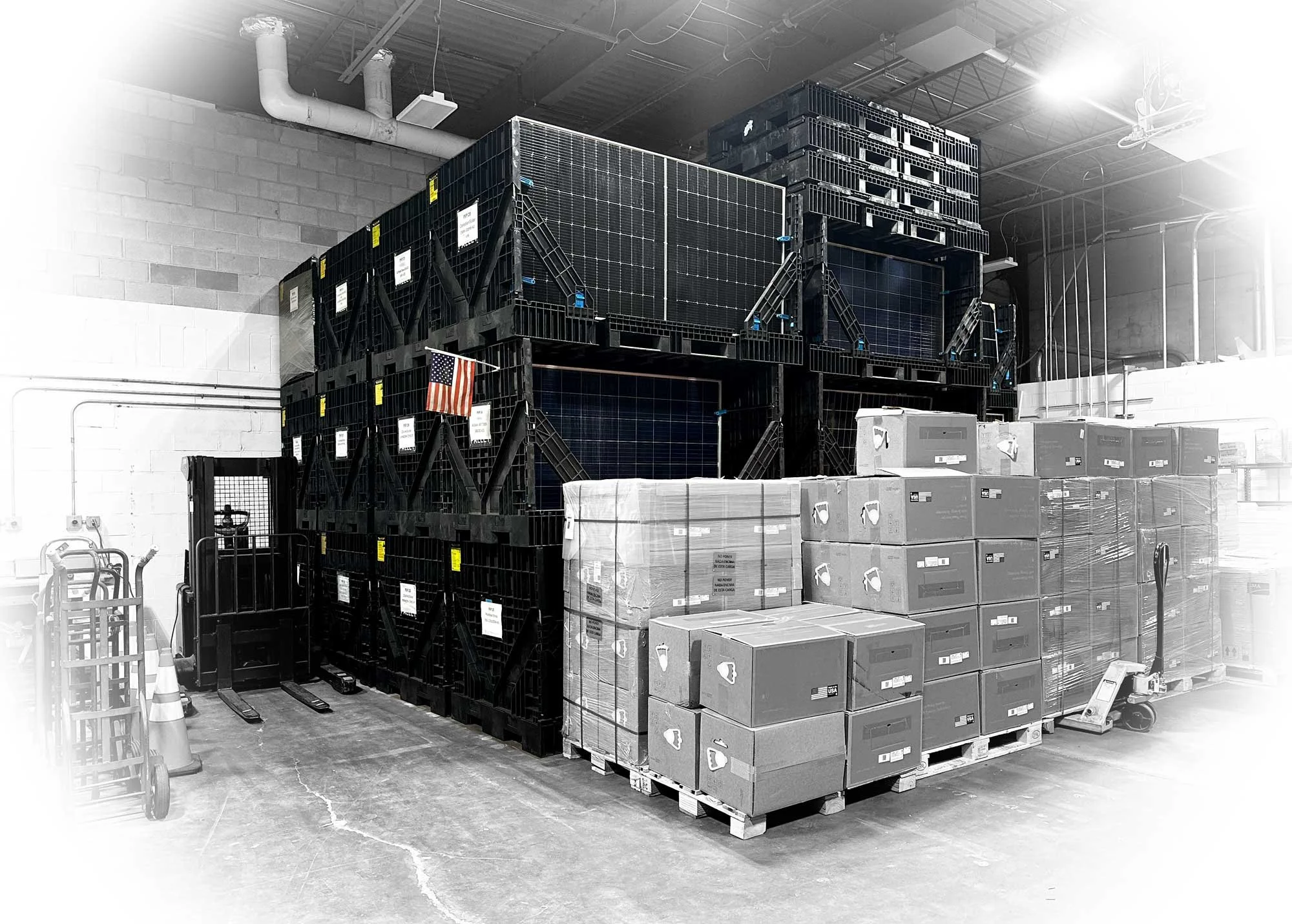
The pallets enabled Ørsted to optimize vertical storage space and provided additional protection during storage. “On the old pallets, we'd have felt unsafe stacking more than one high,” explained RG.
The pallets' durability, collapsible design, and long-term reusability were key factors in Ørsted's decision to repalletize its spare module inventory. "I feel much safer knowing those modules are going to be stored on PVpallets,” said RG. “And I like that the pallets are collapsible—once we're done using one, we can start sending the pallets over to the next solar site."
The sturdier pallet meant better protection for the modules, fewer breaks, and the ability to store modules outdoors (if needed) without the degradation Ørsted had seen with wood pallets. On top of that, RG saw PVpallet as a reusable asset that could be redeployed to future sites, rather than a one-time purchase. The pallets can also be used to send module inventory from one site to another.
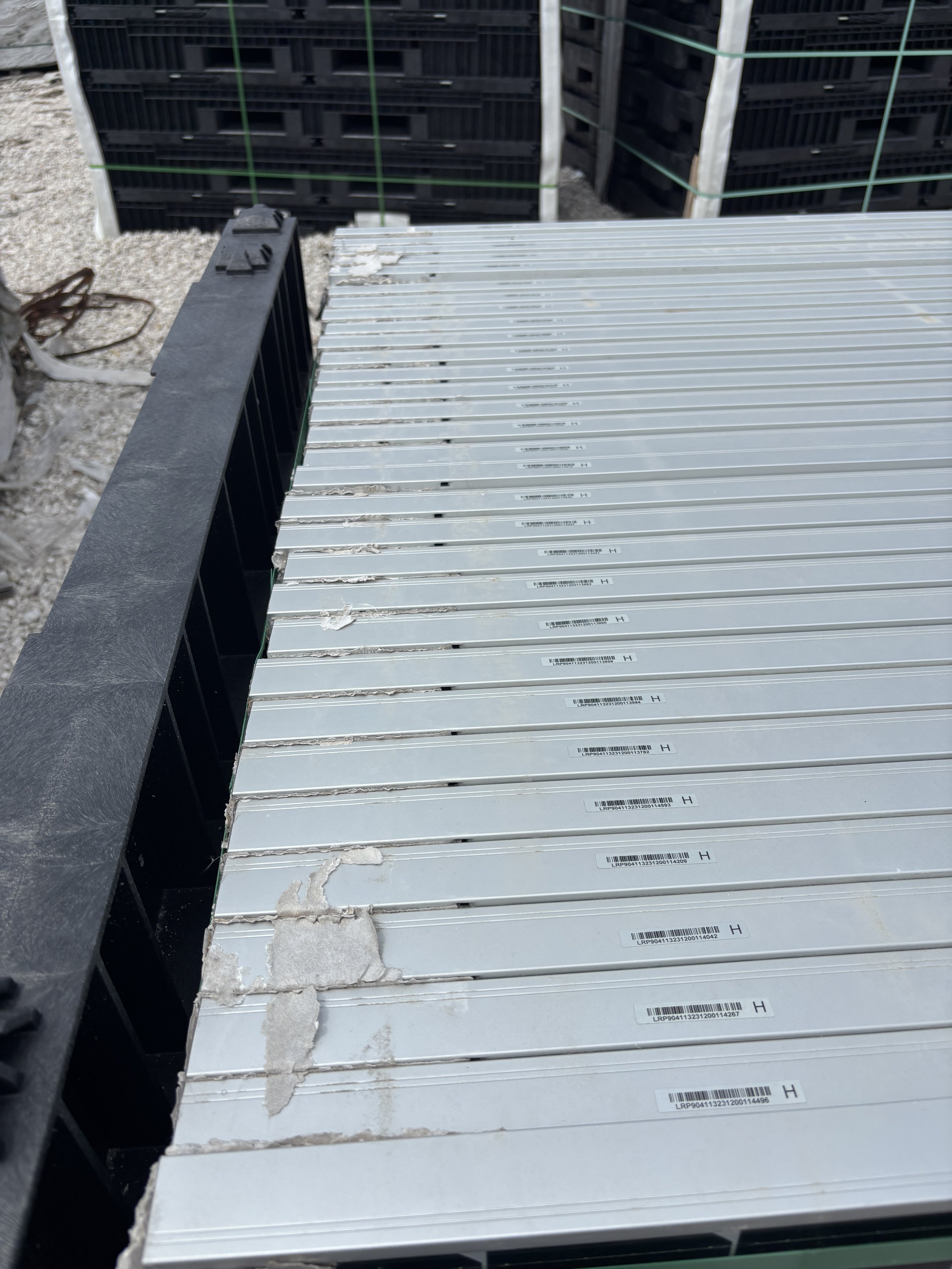
Easy barcode scanning when modules are stored in PVpallet’s solar panel pallets
Results
Because implementation at Old 300 and Mockingbird is recent, Ørsted is continuing to monitor long-term performance metrics. However, the operational benefits were immediate.
Stronger protection. PVpallet replaced deteriorating wood pallets with a durable storage platform designed for repeated handling and long-term storage, reducing the risk of pallet collapse and module damage.
Better use of warehouse space. The stronger pallet design allowed modules to be stacked more safely, helping maximize limited warehouse space.
Long-term reusable asset. Instead of purchasing disposable packaging, Ørsted now owns reusable pallets expected to remain in service for years and be redeployed across future solar projects.
Internally, the switch earned buy-in from leadership once the storage and safety tradeoffs became clear. “My manager and our asset management team were very open to using PVpallet’s solar panel pallets at Old 300,” explained RG. “They understood the benefits of having a more robust system to store the spare modules—and they really liked that they were reusable.”
Outcome
For Ørsted, PVpallet's solar panel pallets solved the storage and safety concerns at Old 300 and Mockingbird. Beyond fixing the immediate problem, the team now has a fleet of reusable pallets that are considered a long-term asset—the same units that protect Old 300's spare inventory today can be redeployed across multiple utility-scale projects over their service life.
In addition to the pallets solving a critical need, RG pointed to the working relationship with PVpallet as a standout part of the experience. "The people on the PVpallet team have been very pleasant to work with, and you don't always find that," remarked RG, specifically noting PVpallet's flexibility when construction timelines changed.
As utility-scale solar portfolios continue to grow, protecting spare module inventory has become an increasingly important operational priority. Ørsted's experience demonstrates how reusable solar panel pallets can improve storage, reduce breakage risk, and create a long-term asset that supports multiple projects over time.
What's Next
RG believes reusable packaging should become part of the industry's standard supply chain rather than an afterthought once breakage occurs. He sees greater collaboration between developers and module manufacturers as the next step toward reducing packaging waste and protecting valuable solar equipment from the start.
Until then, he believes companies managing spare module inventories across multiple utility-scale sites can benefit from investing in reusable solar panel pallets.
"I'd 100% recommend PVpallet's solar panel pallets to improve storage and decrease the amount of breakage we see."